Plan your upcoming sport fishing vacations to one of these unforgettable Resorts!
Alberta
British Columbia
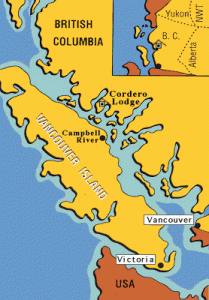
Cordero Lodge – Salmon and Halibut; Blind Channel, B.C.
Eagle Island Lodge – Flyfishing and spincasting for native rainbow trout at a deluxe fishing resort
Sailcone Wilderness Fishing – Salmon and Halibut; Knights Inlet, B.C.
Labrador
Manitoba
Big Whiteshell Lodge – Northern Pike and Walleye; Rennie, Manitoba
Saskoba Outfitters Ltd. – Lake Trout, N. Pike and Walleye; Flin Flon, Manitoba
New Brunswick
Sunset Shan-Gri-La Lodge – Hunting & Fishing on the Miramichi, Doaktown
Newfoundland
Grey River Lodge – Fly fishing for Atlantic salmon on Newfoundland’s #1 wilderness river!
Northern Sport Fishing – Atlantic Salmon, Brook & Sea-Run Trout; Portland Creek, NF
Northwest Territories
Hearne Lake Lodge – Custom Fly-in Fishing, just east of Yellowknife.
Ontario
Air Cochrane – Deep in the Heart of Canada’s Northern Wilderness
Birch Island Lodge – Manitoulin Island District on Lake Huron
Canada Outfitters – Fly-in Fishing Adventures in Northwest Ontario
Chapleau Lodge – Easily reached by air or car…….
Cianci’s Holiday North Lodge – Walleye, Pike & Bass; Trout River Bridge, Ontario
Fireside Lodge – A Canadian Wilderness Experience, Little Vermilion Lake
Kesagami Wilderness Lodge – World Class Fly-in Fishing, Trophy Pike & Walleye, Five Star Dining, Legendary Hospitality
Garden Island Lodge – The Best in Personal Service, Lake Evelyn Lake
Lac Seul’s Scout Lake Resort & McKenzie’s Bay Outpost – Northern Pike and Walleye; Ear Falls, Ontario
Lake of the Woods Lodges Island Resort – Northern pike, world class muskie, walleye, smallmouth bass, Nestor Falls
Leisure Island Houseboat Rentals – Northern Pike, Walleye, Lake Trout; Temagami, Ontario
Maynard Lake Lodge & Outpost – Experience a spectacular wilderness.
Minnehaha Camp Resort – Cottages & Camping on beautiful Wilson Lake, Port Loring, Ontario.
O-Pee-Chee Lake Lodge – Walleye, Northern Pike and Bass; Marten River, Ontario
Papa John’s Place – Walleye, Northern Pike and Bass; Temagami, Ontario
Ray’s Camps – The only Camp on 10,000 Acres of Beautiful Ramsay Lake
Redden’s Camp – Walleye, Muskie and Northern Pike; Kenora, Ontario
Red Lake District – Walleye, N. Pike and Lake Trout; Red Lake, Ontario
Red Pine Wilderness Lodge – Remote fishing in Ontario, Canada for walleye, northern, bass & trout
Sudbury Aviation Limited – Fly-In Fishing; Sudbury, Ontario
Tambir Cottages – More fish per acre than most lakes in Ontario…that’s Rice Lake
Thunderhook Fly-Ins – Walleye, Northern Pike, and Lake Trout; Armstrong, Ontario
Timberidge Air & Outposts – Walleye, Northern Pike, and Lake Trout; Nakina, Ontario
Tomahawk Resort – Cottages, Houseboats, Fishing, & Outdoor Adventures. Lake of the Woods
Quebec
Wapoos Sibi – Escape to this Unique Fish & Game Club in Beautiful Northern Quebec
Saskatchewan
B & L Cabins & Outfitters Ltd. – Walleye, Lake Trout and N. Pike; Lake La Ronge, Saskatchewan
Cree River Lodge – Northern Pike and Walleye; Wapata Lake, Saskatchewan
Minor Bay Lodge & Outposts – MONSTER PIKE; Wollaston Lake, Saskatchewan
Tazin Lake Lodge – Northern Pike and Lake Trout; Tazin Lake, Saskatchewan
Yukon
Circle VH Wilderness Adventures – Fly-in Fishing and Boat Trips; Faro, Yukon
Taylor’s Place Fishing Camp – Lake Trout and Northern Pike; Stewart Lake, Yukon